|
Jan. 22 - Jan. 29, 2012 |
Pursuing Light and Magic
American architect Richard Meier brings his modernist sensibility to Italy
By Mark Curtis
Originally Published: 2005-02-06
Renowned American modernist Richard Meier earned high marks for his design of the Jubilee Church for the Roman archdiocese in 2003. The architect is hoping for a similarly positive response to a new museum he designed in Rome's historic centre.
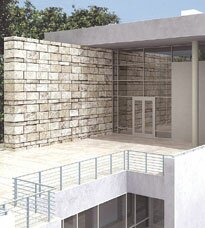
Meier's new building will house the Ara Pacis, or Altar of Peace, a sacrificial altar commissioned by Rome's first emperor, Augustus, in 9 BC to commemorate the end of Gallic and Spanish campaigns. The marble altar sits within a rectangular enclosure and features a bas-relief depicting Augustus, Agrippa, Julius and Tiberius. The ancient monument was unearthed by the government of Mussolini. Architect Vittorio Ballio Morpurgo designed a new building to house the altar in 1938, but by the end of the 20th century the City of Rome concluded the building area was in need of revitalization, and design plans by Meier were approved in 1995.
The new Ara Pacis Museum is intended to be a very transparent building, which will include public exhibition areas, a small auditorium, a museum shop and offices. The area surrounding the museum, including the nearby Mausoleum of Augustus, has been transformed into a more pedestrian-friendly neighbourhood.
"Although it's very small, I think the Ara Pacis [symbolizes] something about life in Rome moving on into the 21st century," Meier says. "That's the most important thing for me about the building. I think it's extremely important that Rome should not become a museum. It should have not only a rich history, but contemporary life as well."
The new museum, located on the east bank of the Tiber River near Ponte Cavour, is scheduled to open on April 21.
An internationally respected architect, Meier's first project on Italian soil was the Jubilee Church in the Rome suburb of Tor Tre Teste. The church, also known as Dio Padre Misericordioso (in celebration of the silver anniversary of the pontifiicate of Pope John Paul II), features an exterior of three massive, white, concrete shells that resemble ship sails but also symbolize the Holy Trinity. Like many of Meier's buildings, the use of a white facade is critical because, as the architect says, "white is never just white; it's almost always transformed by light and that which is changing - the sky, the clouds, the sun and moon." The interplay of natural light with built forms is also central to the New York-based architect's work.
Page 1/...Page 2
|
Comments
CorriereTandem.com editors reserve the right to edit, review and allow or reject, in their entirety, website comments. Those comments that are posted are not the opinions of Corriere Canadese/Tandem, or Multimedia Nova Corporation nor its affiliates but only of the writer. Spelling and grammar errors will not be corrected. We will not allow comments that include personal attacks on citizens at large; comments that make false or unsubstantiated allegations; comments that claim to quote people or reports where the quote or fact is not publicly known; or comments that include vulgar language or libelous statements.
|
| Home / Back to Top |
|
|
 |
|
|




























 Share
Share