|
Nov. 7 - Nov.14, 2004 |
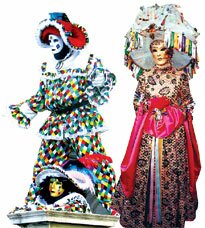
The majestical masks of Venice's carnival
How the famed dress of the carnevale survived dread and censorship throughout the centuries
By Angela Baldassarre
Originally Published: 2004-02-22
Between February 7 and 24, Venice hosts one of Europe's biggest and most glamorous carnivals. During the 10 days before Ash Wednesday, the city comes alive with parties and masked balls in the many mansions and palaces.
In Venice, Carnival first gained widespread popularity in the 18th century. The Venetian tradition of wearing masks and costumes was reportedly started by the "stocking companies" - clubs of young Venetian noblemen intent on amusing their fellow Venetians by organizing parties and spectacles. The gentlemen were famous for the colourful stockings they wore.
Today, the Carnival in Venice lasts two weeks. The nights beckon with masked balls and sumptuous parties, and costumed revellers crowd the narrow streets, bridges and squares, while the sounds of trumpets, firecrackers, drums and shouts fill the air. Street musicians, flame and sword-swallowers, jugglers, mimes and magicians entertain passers-by on every corner.
But no matter how much fun is had, it all ends at midnight on Shrove Tuesday, when an effigy of Carnival is burned to signal the end of the festival. Everyone parades to the Piazza San Marco in their masks to see the "Concert of Ashes," which is followed by an Ash Wednesday Mass to mark the beginning of Lent.
The masked partygoers are what make the Venice Carnival one of the most romantic and traditional of Europe's big festivals. The tradition behind the Venice carnival is one of the many things that gives Venice its romantic aura. But wearing masks during these celebrations wasn't always tolerated by La Serenissima's lawmakers.
The oldest document pertaining to the use of masks in Venice dates back to 2nd May 1268. In the document it is written that it was forbidden for masqueraders to practice the game of the "eggs". From the early 14th century onwards, new laws started to be promulgated, with the aim of stopping the relentless moral decline of the Venetian people of the day. This restrictive carnival legislation started with a decree on February 22 1339 prohibiting masqueraders from going around the city at night. A decree that helps us understand just how libertine the Venetians of the day were, is that of January 24 1458 which forbade men from entering convents dressed as women to commit "multas inhonestates"! In a similar vein, the decree of February 3 1603 is interesting in that it attempted to restore morality in the convents.
Page 1/...Page 2
|
| Home / Back to Top |
|
|
 |
|
|



























 </ td>