|
Dec 18,2005 - Dec 25,2005 |
Making a moviemaking Statement
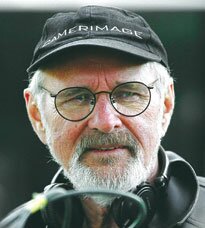
Oscar-winning Canadian veteran filmmaker Norman Jewison tackles Nazi criminal in new film
By Angela Baldassarre
Originally Published: 2003-12-14
Norman Jewison epitomizes Hollywood North. With over 50 Oscar nominations under his belt, including the prestigious 1998 Irving Thalberg Memorial Award, the Toronto-born filmmaker is so well-known around the world that Americans still can't believe he's not one of their own.
For more than three decades Jewison has created films that defied Hollywood convention with themes that ranged from racial intolerance to social injustice. Although he never won a directing Oscars, his films walked away with nine statuettes including 1967's In the Heat of the Night, The Russians are Coming! The Russians are Coming! (1966), Fiddler on the Roof (1971), Jesus Christ Superstar (1973), and Moonstruck (1987). He also directed And Justice for All, a satire on the American legal system starring Al Pacino; A Soldier's Story, again touching on racial intolerance; Agnes of God starring Jane Fonda; and The Hurricane, starring Denzel Washington as jailed boxer Rubin "Hurricane" Carter.
And though he runs the Canadian Film Centre, designed "to develop the artistic and technical skills of talented directors, writers, and producers in Canadian film," the 77-year-old filmmaker still has time to churn out movies, the latest being The Statement, based on Brian Moore's novel.
The movie stars Michael Caine as Pierre Brossard, a French man who collaborated with the Nazis in the execution of French Jews during World War II, and then sheltered from prosecution by right-wing elements within the Catholic Church for nearly 50 years afterward. But international human rights organizations are now on his tail for having committed crimes against humanity.
Norman Jewison talked to us recently about The Statement.
What was the compelling reason that attracted you to this subject matter?
"I think it was the first time I read the book. Brian Moore - not only was one of the more brilliant Canadian novelists, or Irish-Canadian novelists - but he was always finding big themes upon which he could write stories that dealt with kind of a moral consciousness and he always made them exciting. From the first time I read the book, I thought it would make a wonderful film and it was about a subject that I was old enough to relate to, shortly after World War II, and the problems with the Vichy Government, and the cover-ups and before it became a De Gaullist France. So, I think it was the book and I found that [producer] Robert Lantos had acquired the film rights to the book and so when Robert and I talked about it, I was very anxious to make the film."
Page 1/...Page 2
|
| Home / Back to Top |
|
|
 |
|
|



























 </ td>