|
Feb.27,2005 -Mar.6,2005 |
Masterpieces View of the Counterreformation
Visions and ecstacy traces European works from 16th and 17th century with over 100 works in six different sections
Originally Published: 2003-12-07
In the latter half of the 16th century, the Catholic Church was split by the hardest schism in its history, the Protestant Reformation of Martin Luther and John Calvin. Faced with the possibility of being overwhelmed, Rome pursued two simultaneous strategies: internal reform to eliminate the abuses that had polluted the clergy, and the fight against heresy with any means available.
This two-pronged approach is known to the scholars under a double name: "Catholic Reformation", which successfully rekindled religion in those countries that had remained Catholic; and "Counterreform-ation", the struggle against heresy, which bloodied Europe for close to a century (from 1555 to the mid-17th century). Catholics, Lutherans, Huguenots, Anglicans, Presbyterians, zealously massacred one another in the name of their respective orthodoxies. In addition, there was the Inquisition, the Index of Forbidden Books, and the burning of 'heretics' of all sides at the stake.
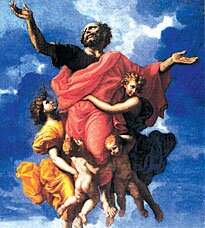
At the high point of Baroque, depictions of ecstasy became a constant in Counterreformation art. Major painters kept portraying ecstatic moments in the lives of saints: Caravaggio, Guercino, Guido Reni, Carracci, Algardi, Bernini, Lanfranco, Gimignani, and many more.
Their works can now be admired in a great exhibition, Visioni ed Estasi. Capolavori dell'arte europea del XVII e XVIII secolo ("Visions and Ecstasy. Masterpieces of European Art of the 17th and 18th centuries"), taking place in the Vatican Museums until January 18, 2004. The occasion for the exhibition is the fourth centenary of the birth of St. Joseph from Copertino (1603-2003).
Almost 100 artworks are organized in six sections. The first one includes depictions of 'callings', with saints in prayer or meditating. The second shows the 'answers', when the saints respond to the calling. In this section there is an emblematic portrait of St. Catherine of Siena with her arms spread and marked by stigmata, signifying her imitation of Jesus. The third section deals with visions, with reality fading in the background, and includes also some terracotta statuettes. The fourth is titled Musica del cielo ("Heaven's Music"), while the fifth is the core and culmination of the exhibition, displaying all sorts of mystical experiences, up to the moment of death, as painted and sculpted by the most famous artists of the time. Finally, the last section deals with the afterlife.
Page 1/...Page 2
|
| Home / Back to Top |
|
|
 |
|
|



























 </ td>