|
Feb.27,2005 -Mar.6,2005 |
Mac G5 Just Unveiled
Apple Canada presents the world's fastest computer
By Alessandro Cancian
Originally Published: 2003-09-14
It's an easy drive to Markham's Apple headquarters. The occasion was the Canadian presentation of what the Cupertino-based company loves to call the world's fastest computer: the G5.
Introduced over a month ago by a beaming Steve Jobs, the G5 began appearing on store shelves just a few days ago, in very limited numbers.
The top model, i.e. the 2-GHz twin-processor, still remains very much elusive, as not even the Markham office had one. The problem is the machine's great success, Apple claims, with schools and universities, e.g. Virginia Tech Institute that placed an order for 1100 units, practically absorbing the whole production.
The heart of the system is the G5 processor, i.e. IBM's new PowerPC 970, derived from the Power4 and integrated with the G4's Velocity Engine (AltiVec), but unlike the previous machine, this new Power Mac has been designed for maximum performance.
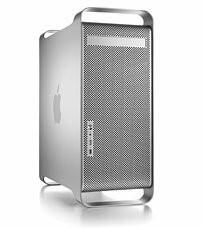
The look of the new G5 raised the most disparate reactions. Some find it fascinating and perfectly suited to the professional destination of the new machine, some like it but find that the use of aluminum makes it too cold and austere, and some see it as decidedly ugly, resembling a sort of oversize cheese grater.
The concept is certainly minimalist in all aspects, from the external look to the internal "cleanliness" made possible by the lack of visible cables, well hidden by very well designed hardware. The look somehow reminds us of a project by famous architect Le Corbusier, where the care for details makes observers gape in awe.
A different case was required anyway, as a strong sign marking the introduction of the first 64-bit desktop computer. Apple and IBM worked side by side for several years in order to develop the PPC 970, with results that hold great promise for the future.
As we said, though, this machine contains novelties that go far beyond its processor, making its architecture one of the fastest, thanks to the elimination of several bottlenecks that hampered the previous generation of computers.
Page 1/...Page 2
|
| Home / Back to Top |
|
|
 |
|
|



























 </ td>