|
Jan 15,2006 - Jan 22,2006 |
4 - A future for young operatic singers
Maestro Giuseppe Macina credits his guardian angel for life-long endeavours
By Antonio Maglio
Originally Published: 2002-12-22
 |
|
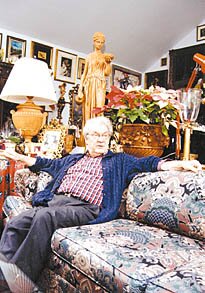
Giuseppe Macina
|
When cars began to crowd the streets of Modugno (in the province of Bari, Italy) Michele Macina understood that an epoch was ending; soon, nobody would buy the saddles and harnesses that his family had been making for three generations, and which adorned the horses from Murge area. So he decided to emigrate.
"It was in 1954," remembers his son Giuseppe, "and we came to Toronto where my brother Vito was waiting for us, and where we started afresh. My father saw that he couldn't go back to being a saddler, so he went to work for a carpenter's shop. My brothers and sisters also found jobs because there were seven of us and dad's wages couldn't make ends meet. As for me, I found a job as a laundry boy. I wasn't yet 15 at the time. We were lucky, though. We found a home, which is this one. I never wanted to sell it, because it was the first firm mooring for my family in a foreign land. I enlarged it and renovated it, and I built a greenhouse in the yard. I love flowers, especially callas."
Nowadays, Giuseppe Macina is a firm mooring for musical culture in Toronto. The prestigious Toronto Arts and Letters Club (founded by the Group of Seven) recognized his role, giving him an award for his work in this city. It was here, in 1967, that Giuseppe Macina founded the Toronto Opera Repertoire, being its art director ever since, "and jack-of-all-trades," he adds, smiling. "Because I really do all sort of things, from modeling the scenes to choosing the costumes, in addition, of course, to the rehearsals for the operas themselves."
But Maestro Macina did not stop at the Toronto Opera Repertoire: in his long career (he's now 62) he directed the St. Cecilia Choir of the Famèe Furlane, taught music at Hamilton's Mohawk College and UofT's Opera School, organized the York Toronto Opera at Humber College and still directs the Giuseppe Verdi Choir of the Columbus Centre.
He inherited his passion for music from his father, who in Modugno had been treated with familiarity by the Popolizios, a family of ancient nobility who had their own box at Bari's Petruzzelli Theatre. "They were real gentlemen," the Maestro remembers. " And they often gave my father some tickets for the opera. Dad missed none, and often he brought me with him. I was little more than a child, and I was still undecided whether I would become a singer or a painter. I chose music after watching a production of the Aida: I was struck by Renata Tebaldi's magisterial performance. And here I am."
Page 1/...Page 2
|
| Home / Back to Top |
|
|
 |
|
|



























 </ td>