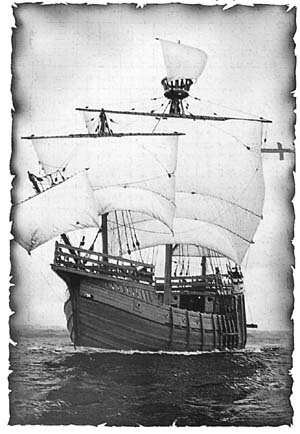
 Caboto 100 years too late? A Nova Scotian village claims a Scotish prince landed there in 1398 Did a Scottish prince from the Orkney Islands predate Giovanni Caboto's arrival in Canada by 100 years? That's what members of the Sinclair Society in a small town in northeastern Nova Scotia believe. They say Prince Henry Sinclair landed on their shore 600 years ago this week, on June 2, 1398. Also known as the Earl of the Orkneys, Prince Henry oversaw these Norwegian Islands with a vast navy which he used to explore the North Atlantic. Academic historians have yet to validate the tale, but celebrations are scheduled across the province, even if they are a far cry from the multi-million dollar festivities last year honoring the 500th anniversary of Caboto's arrival. Belief is strong among the amateur historians, Sinclair clan members and proud locals who are celebrating the landing. "So much of this still speculative, but there's enough of it that is so compelling," says William Sinclair of the Clan Sinclair Society of Canada. "We believe that there were lots of people who visited the New World, long before Columbus, not just Prince Henry...however, he's the first known person ho came here and did not claims the country for king or country." That would appear to agree with Francesco Alusio, author of A Passion for Discovery, a biography of Caboto. "Yes, I knew Irish monks were there before the Vikings. They landed in Labrador. This was discovered in Scandinavian folk tales. The Vikings found the Mi'kmaq Indians wearing crosses and they had bells." Alusio, a retired architect, appeared slightly amused at the Scottish tale. "I'd like to read about it," he chuckled. He said a friend is visiting Nova Scotia and intends to find out more details for him. According to legend, the prince sailed across the Atlantic from the Orkney Islands of Norway with 12 ships and up to 300 crew. He landed at Guysborough. A navigator's log recovered in Venice records the trip, detailing geography remarkably similar to that of Nova Scotia, says Sinclair. A symposium in Scotland last fall dedicated to establishing truth to the tale raised substantial circumstantial evidence, but no definitive proof, says Sinclair, who attended as an observer. Carvings of North American plants at a chapel in Scotland belonging to the prince's grandson suggest the the prince had visited the New World. And Mi'kmaq legends describing a bearded visitor with red hair and green eyes who taught them to fish with nets further support the story, says Sinclair. However, others say the tale is bunkum fueled by overzealous proponents seeking to make a name for Sinclair. Brian Cuthbertson, a former archivist with the Nova Scotia Public Archives, says any notion Prince Henry ever set foot in North America is absolute nonsense. "There is no evidence whatsoever in documents or tradition that Henry Sinclair ever sailed west of Ulster," he says, pointing out that most believers are not traditional historians. Caboto is regarded as the first modern European to land in Canada. In quest of a route to the spices of the east, Caboto sailed from Bristol, England with 18 crew on the Matthew in May, 1497. He sighted Cape Bonavista, Newfound-land on June 24. He proceeded along the eastern and southern coasts of Newfoundland, but he did not see any natives, although he found evidence that the land had been inhabited. The next year, he returned with five ships and 300 crew, stopping in Greenland, and Labrador before continuing south until about New Jersey. Unable to find a passage to the east, he set sail for home. Alusio says his research shows that Caboto hailed from Gaeta, a small town between Rome and Naples and not from Genoa or Venice as had been previously thought. |